

QA Testing Cost for a SaaS Launch in 2026: A Pricing Breakdown

By Mir, SEO Expert, 7 years Digital Marketing Agency Experience.
Before you get a quote, it helps to know roughly what you’re pricing. QA testing cost for a SaaS launch varies widely depending on scope, engagement model, and how much of the work is manual versus automated – this breaks down the real variables so you can evaluate a proposal instead of just reacting to the total number.

Key takeaways:
- QA testing is typically priced either hourly, as a fixed-scope engagement, or as a monthly retainer – each fits a different launch situation.
- Manual testing generally costs less upfront than automated testing, but automation pays off faster on flows you’ll retest repeatedly.
- Scope (how many flows, how many devices/browsers, how deep the security testing goes) drives QA testing cost more than the provider’s base rate does.
- A one-time pre-launch QA push and an ongoing QA retainer are priced very differently, and most first-time SaaS launches only need the former.
- The cheapest quote isn’t automatically the best value if it doesn’t cover regression testing on your core flows before release.
What Drives QA Testing Cost for a SaaS Launch
Four variables matter more than any single “average price” you’ll find online:
- Scope of coverage. Testing one core signup-to-payment flow costs meaningfully less than testing every feature across every device and browser combination. Define your must-test list before requesting quotes, not after.
- Manual vs. automated. Manual testing has a lower upfront cost and is usually the right fit for a product still changing shape. Automated testing has a higher setup cost but a lower cost-per-test-run over time, which matters more once you’re testing the same flows across every release.
- Engagement model. A fixed-scope pre-launch engagement (test everything once, thoroughly, before you ship) is priced and structured differently than an ongoing monthly retainer (continuous testing across every release going forward).
- Depth of security and performance testing. Basic functional and regression testing is the baseline. Real penetration-style security testing or load testing under simulated traffic adds meaningfully more cost and requires more specialized expertise.
A note on numbers in this post: rather than publish specific dollar figures or hourly rate ranges – which would either be invented or borrowed from a third party and presented as current market reality, neither of which meets this brand’s accuracy standard – the rest of this post describes cost patterns (what tends to cost more relative to what, and why) rather than firm pricing. Add Next Rise Digital’s real, currently-approved rate card here before publishing if you want to quote specific figures.

Typical Pricing Models Behind QA Testing Cost
| Model | How it works | Best fit for |
|---|---|---|
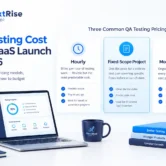
| Hourly | Billed per hour of testing work – the most flexible but least predictable total cost | Small, well-defined scope, or a first engagement where scope is still being figured out |
| Fixed-scope project | One flat price for a defined test plan covering specific flows before a launch date | A one-time pre-launch push, which is the most common need for a first SaaS MVP |
| Monthly retainer | Ongoing testing across every release, typically priced higher in total than a single fixed-scope project but lower per release over time | A product already shipping regularly, needing continuous QA rather than a single push |
Most SaaS teams launching an MVP for the first time fit the fixed-scope model best: a defined set of core flows, tested thoroughly once, before a specific launch date, rather than an open-ended ongoing engagement they don’t need yet. This is also the model that tends to keep QA testing cost most predictable for a first SaaS launch.
A Realistic Budget for QA Testing Cost on a SaaS Launch
Rather than a single number (which would misrepresent how differently priced two “MVP testing” projects can be depending on scope), budget by asking these questions and pricing each component:
- How many core user flows need functional testing? Signup, core action, payment, account management – list them explicitly.
- How many device/browser combinations matter for your actual users? Testing on 3 browsers and 2 device types costs less than testing on 8 and 5, and most early products don’t need the wider matrix yet.
- Does your product handle payment or personal data? If yes, basic security testing isn’t optional, and should be scoped in from the start rather than added after a scare.
- Will you need regression testing built into your release cadence going forward, or just for this one launch? This determines whether you’re pricing a project or a retainer.
A QA partner scoping this properly should be able to walk through each of these with you and price against your actual flows, not a generic “MVP testing package” that may not match what your product actually needs tested.
What This Looks Like in Practice
For example, a SaaS team launching a subscription product for the first time might scope a fixed pre-launch engagement covering account creation, the core product flow, and Stripe-based payment, tested manually across the browser/device combinations their target users actually use, with a lightweight automated regression suite set up for those same core flows so future releases don’t require re-scoping the whole engagement from scratch. This is an illustrative pattern, not a documented client engagement or pricing example.
At Next Rise Digital, QA engagements are scoped against your actual product and launch date, not a generic package, and every quote breaks down exactly which flows, devices, and testing types are included – so you can evaluate the QA testing cost for your SaaS launch against what your product genuinely needs. You can see how QA connects to our development process on our our process page, and review our full service range on our case studies page.
How to Evaluate a QA Quote You’ve Already Received
- Does it list specific flows and devices, or just a vague “full testing” line item? Specificity is a good sign; vagueness usually means scope creep or gaps later.
- Does it explicitly include regression testing, or only initial functional testing? A quote that skips this leaves you exposed on your very next release.
- Is security testing included, scoped separately, or missing entirely if you handle payment or personal data? This should never be silently absent from a proposal for a product handling sensitive data.
- Is the engagement model (fixed-scope vs. retainer) actually matched to what you need right now, or are you being sold an ongoing retainer for a one-time pre-launch need?
A quote that answers all four of these clearly is usually a fair reflection of real QA testing cost for a SaaS launch – one that skips them is harder to evaluate on price alone. Not sure yet which testing types your launch actually needs before you start pricing it out? See our breakdown of QA testing types explained – the scope you settle on there is what should drive the quote you’re evaluating here.
Common QA Budgeting Mistakes to Avoid Before Your SaaS Launch
Even teams that request multiple quotes for QA testing cost on a SaaS launch tend to fall into a handful of predictable traps. Knowing them ahead of time makes it far easier to compare proposals on substance rather than price alone.
- Treating “testing” as one line item. A single bundled number hides whether functional, regression, and security testing are actually all included, or whether you’re only getting the cheapest one of the three.
- Skipping regression testing to save on the first invoice. Regression testing protects the flows you already validated when you ship your next update – cutting it usually just moves the cost to your second release instead of removing it.
- Testing every device and browser “just in case.” Expanding the matrix beyond where your actual users are inflates QA testing cost without meaningfully reducing risk. Real usage data should set the matrix, not a worst-case assumption.
- Leaving security testing out of an MVP scope entirely. If your SaaS product touches payment details, account credentials, or personal data, basic security testing belongs in the initial scope, not a “phase two” that may never get funded.
- Locking into a retainer before you’ve shipped once. A retainer makes sense once you have a release cadence to test against. Before your first launch, a fixed-scope engagement is almost always the more accurate way to price what you actually need.
Avoiding these five mistakes tends to do more to control QA testing cost for a SaaS launch than negotiating on a provider’s hourly rate ever will.
Pricing
Three ways QA testing gets priced
Every product needs a different amount of testing at a different stage. Pick the model that matches where yours is right now — you can always move between them later.
Hourly
Billed for the hours actually spent testing. No commitment, no fixed plan.
- Pay only for time used
- Scope can change mid-way
- Weekly time log included
Best for small or undefined scope
Fixed-Scope
One price for a defined test plan — every case scoped and agreed before work starts.
- Price locked before testing begins
- Full test plan & coverage report
- Bug list handed off at the end
Best for a first MVP launch
Monthly Retainer
Ongoing testing on every release, for products that already ship regularly.
- Coverage on every release
- Priority turnaround on bugs
- Monthly quality summary
Best for products shipping often
Frequently Asked Questions
Q: What is a typical QA testing cost for a SaaS launch?
A: There’s no single honest number – it depends on how many flows, devices, and testing types are in scope. A fixed-scope pre-launch engagement covering your core flows is the most common (and most predictably priced) starting point for a first SaaS launch.
Q: Is QA testing worth the cost for a small SaaS MVP?
A: Yes, in most cases – the cost of a properly scoped pre-launch testing pass is typically small relative to the cost of a broken payment flow or security gap discovered by real users after launch.
Q: Should I choose hourly, fixed-scope, or retainer pricing for my first launch?
A: For a first launch, a fixed-scope engagement covering your defined core flows is usually the best fit – it’s priced against a clear deliverable rather than open-ended hours, and matches the one-time nature of a pre-launch push.
Q: Does automated testing cost more than manual testing?
A: Automated testing typically has a higher upfront setup cost but a lower cost per test run over time, so it makes more financial sense for flows you’ll retest repeatedly across many future releases, not for a single one-time pre-launch check.
Q: What should be included in a QA quote for an MVP launch?
A: At minimum, functional testing on core flows, regression testing, and basic security testing if you handle any payment or personal data, each explicitly itemized rather than bundled into a vague “full testing” line.
Q: Is the cheapest QA quote usually the best choice?
A: Not automatically. A cheaper quote that excludes regression or security testing on a product that needs them isn’t actually a lower-risk option – it’s a narrower scope wearing a lower price tag, and it can end up raising your real QA testing cost later through rework.
Contact
If you’re scoping QA testing cost for an upcoming SaaS launch and want a quote broken down by flow, device, and testing type rather than a single bundled number, get in touch with Next Rise Digital. Tell us your target launch date and the core flows you need covered, and we’ll walk you through what a properly scoped QA engagement looks like for your product.