


7 Reasons Why QA Testing Services Is Essential Before Your App or Website Launch
Launching a website or app without proper testing is like opening a store without checking if the doors lock or the lights turn on. QA testing services exist to catch the bugs, broken flows, and security gaps that would otherwise reach real customers first, often at the worst possible moment. This guide explains why quality assurance deserves a place in every launch plan, not just an afterthought squeezed in before deadline.
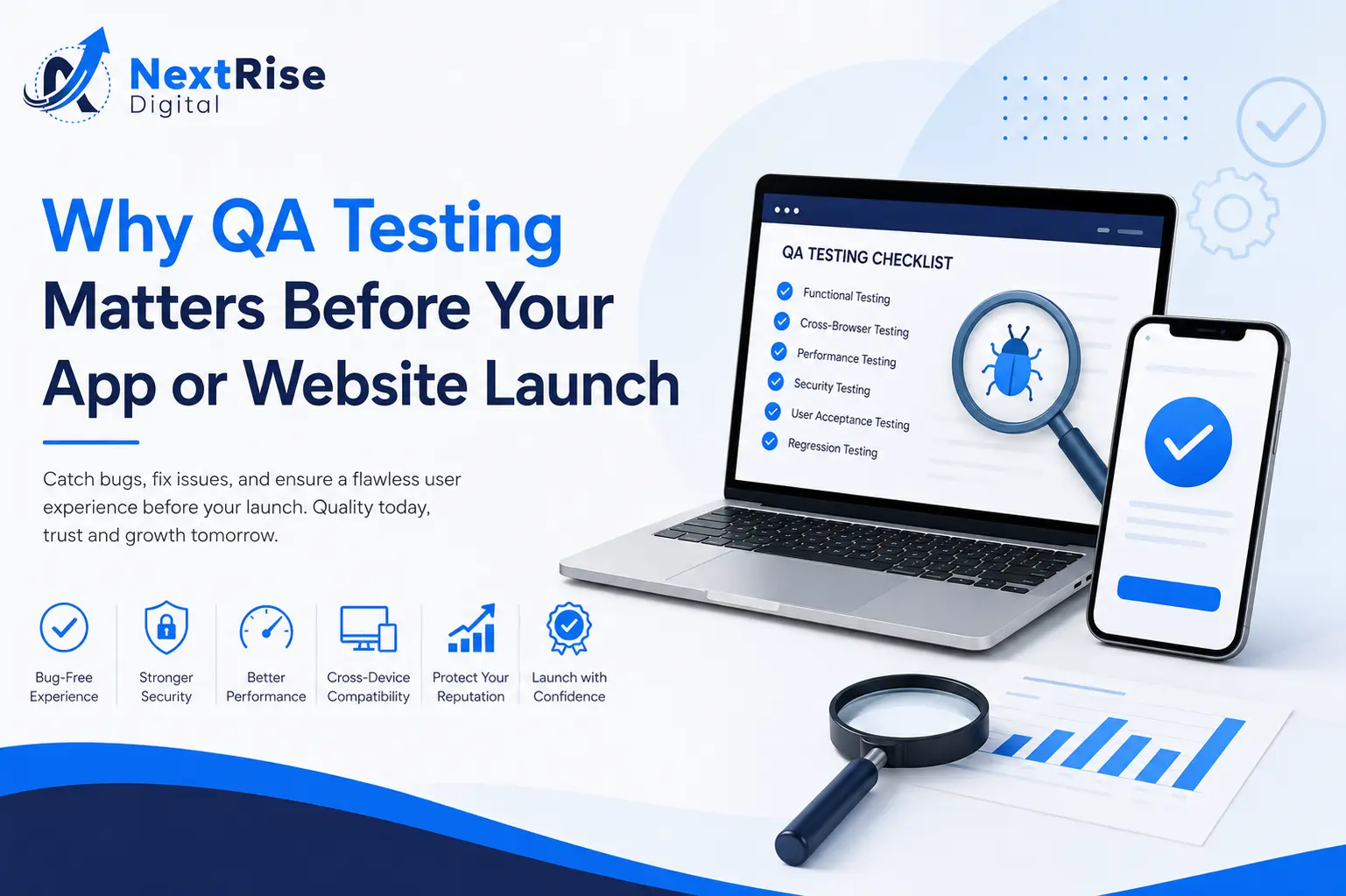
What Is QA Testing Services?
Quality assurance (QA) testing is a structured process of verifying that software, whether a website, mobile app, or custom platform, works exactly as intended before it reaches users. It covers everything from functional accuracy to performance under load, security vulnerabilities, and consistent behavior across devices and browsers.
The Real Cost of Skipping QA Testing
Businesses that skip or rush QA testing often pay for it later, and usually at a higher cost than the testing itself would have been. Common consequences include:
- Lost revenue from broken checkout flows or forms that fail to submit
- Damaged reputation when customers encounter bugs publicly, especially on social media
- Emergency development costs to fix issues discovered after launch, often more expensive than pre-launch fixes
- Security vulnerabilities that go unnoticed until they’re exploited
- Poor search rankings caused by broken pages, slow load times, or crawl errors
A single overlooked bug in a payment flow, for example, can quietly cost thousands of dollars in lost transactions before anyone notices the pattern.
Types of QA Testing Every Launch Needs
Functional Testing
This verifies that every feature works as designed, from navigation menus to contact forms to checkout processes. Functional testing confirms the basic promise of your software: that it does what it’s supposed to do.
Cross-Browser and Cross-Device Testing
A website or app that works perfectly on one browser or device can behave completely differently on another. Cross-browser testing ensures a consistent, reliable experience whether a visitor uses Chrome on a laptop or Safari on an iPhone.
Performance and Load Testing
Performance testing evaluates how your site or app behaves under real-world traffic, including spikes during sales events or marketing campaigns. Slow load times or crashes during high-traffic moments can undo months of marketing investment in a matter of minutes.
Security Testing
Security testing identifies vulnerabilities before attackers do, covering areas like data encryption, authentication flows, and protection against common exploits. This is especially critical for e-commerce sites and any platform handling customer data.
User Acceptance Testing (UAT)
UAT brings real end users or stakeholders into the process to confirm the product meets actual business needs, not just technical specifications. This step often catches usability issues that automated testing alone would miss.
Regression Testing
Every time new code is added or a bug is fixed, regression testing confirms that the change did not break something else that was previously working correctly. This is essential for any platform that continues to evolve after launch.
How QA Testing Fits Into the Development Process
QA should not be treated as a final checkbox before launch. The most effective approach integrates testing throughout the entire development lifecycle, catching issues early when they’re far less expensive to fix. A defined development and delivery process should include testing checkpoints at every major milestone, not just a single review at the very end.
This is especially important for projects involving custom web and app development, where complex functionality creates more opportunities for something to break unexpectedly.
Signs Your Business Needs Professional QA Testing
- You’re launching a new website, app, or major feature update
- Your platform handles payments, sensitive data, or user accounts
- You’ve experienced recurring bugs or customer complaints after previous releases
- Your development team is small and stretched across too many priorities
- You’re preparing for a high-traffic event like a product launch or seasonal sale
“Next Rise Digital’s QA team caught several critical bugs in our checkout flow before launch that we had completely missed internally. That level of thoroughness saved us from a very costly problem.”
– Michael Rodriguez, Founder & CEO, Apex Innovate
QA Testing Across Different Project Types
Not every project requires the same testing approach. A marketing website with a contact form and blog needs a lighter testing process than a custom web application handling user accounts, payments, or sensitive data. Understanding the scope of testing your specific project needs helps avoid both under-testing critical systems and over-spending on excessive testing for a simple site.
Websites and Landing Pages
For standard business websites, testing typically focuses on functional accuracy of forms and links, cross-browser and cross-device rendering, page speed, and basic security checks like SSL configuration. Since these sites usually don’t handle complex transactions, testing cycles tend to be shorter and more streamlined.
E-Commerce Platforms
E-commerce sites require significantly more rigorous testing, since checkout flows, payment processing, inventory syncing, and shipping calculations all need to work flawlessly. A single bug in a discount code field or shipping calculator can either cost you revenue directly or erode customer trust when pricing appears incorrect.
Custom Web and Mobile Applications
Custom applications, especially those involving user accounts, real-time data, or third-party integrations, require the most extensive testing. This often includes API testing, database integrity checks, and testing across multiple operating system versions for mobile apps, since fragmentation across devices creates far more potential failure points than a typical website.
Building a Culture of Quality, Not Just a Testing Phase
The most reliable software isn’t produced by a single testing phase at the end of development. It comes from teams that build quality checks into every stage, from initial requirements gathering through design, development, and deployment. This mindset shift, from “testing as a gate” to “quality as a continuous practice,” tends to produce more stable products with fewer surprises after launch.
Practical ways to build this culture include involving QA early in project planning rather than only at the end, maintaining detailed documentation of known issues and their resolutions, and running smaller, more frequent testing cycles rather than one massive push right before launch. Businesses that adopt this approach often find that overall development timelines shorten over time, since fewer late-stage surprises derail the schedule.
What to Look for in a QA Testing Partner
Not all testing is created equal. When evaluating a QA testing agency USA businesses can rely on, look for:
- A documented testing methodology, not an ad hoc process
- Experience testing across multiple platforms and device types
- Clear, detailed bug reports with reproduction steps, not vague summaries
- A process for retesting fixes to confirm issues are fully resolved
- Transparent communication about timelines and coverage
The Long-Term Business Case for QA
Beyond avoiding immediate bugs, consistent QA testing protects your brand’s reputation over time. Customers who encounter a broken feature or a confusing error message rarely give feedback directly. Instead, they simply leave, often without ever returning, and sometimes share their frustration publicly. Investing in thorough testing is ultimately an investment in customer retention and word-of-mouth reputation, both of which are far more expensive to rebuild than to protect in the first place.
Frequently Asked Questions
How much does QA testing cost?
Cost depends on the scope and complexity of your platform, ranging from a focused pre-launch review to ongoing testing integrated throughout development. Request a detailed scope and quote based on your specific project.
Can’t my development team just test their own code?
Developers can catch some issues, but dedicated QA testing brings an independent, structured approach that’s specifically designed to find what developers might overlook in their own work.
How long does QA testing take before a launch?
Timelines vary based on platform complexity, but most thorough testing cycles take one to three weeks, and should be scheduled well before your target launch date rather than squeezed in at the last minute.
What happens if bugs are found after launch?
A good QA process significantly reduces post-launch issues, but ongoing monitoring and a plan for rapid fixes remain important even after a successful launch.
Launch with Confidence
Skipping QA testing might save a few days in the short term, but it almost always costs more in lost revenue, damaged trust, and emergency fixes down the line. A rigorous, structured testing process protects your investment and ensures customers experience your website or app exactly as intended. See real examples of QA-driven launches in our case studies.
Planning a launch and want to make sure everything works flawlessly? Contact our team for a free QA consultation before your next release.


2 Comments
7 Costly Mistakes When Choosing Who Builds Your Web App
September 7, 2026 at 8:48 am[…] always costs more later, once bugs surface in production in front of real users. Our guide on QA testing before launch covers exactly what a proper pre-launch process should […]
Avoid These 12 Costly Mistakes When Hiring a Design Agency
September 8, 2026 at 8:21 am[…] always costs more later, once bugs surface in production in front of real users. Our guide on QA testing before launch covers exactly what a proper pre-launch process should […]